
Iraq


Iraq
Floating architectures and traditional boats on the Tigris and Euphrates Rivers
Iraqi river and wetland heritage, including vernacular architectures and boats, demonstrate rich craftsmanship and traditional ecological knowledge. Boats, making effective and elegant use of local materials, were key to accessing resources and connecting communities throughout the region for millennia.
Along the Tigris and Euphrates rivers, locally-led Heritage Boat Clubs and workshops are reviving ancient crafts on the verge of extinction following decades of war and escalating climate change. A remarkable set of ancient boat types has been recovered, including the Meshouf and Tarada (wooden canoes of the marshes), Shasha and Zaima (cane or plant fibre boats), Isbiya (barge of Anbar), and Guffa (coracle of central Iraq).
Building on this knowledge, the Open Museum Initiative for Water Culture revitalises the rivers’ role as a means of connection and cultural knowledge-sharing.

Copyright: R. Salim and H. Lewis,
Safina Projects and Open Museum Initiative for Water Culture
(Basra Hub).
Drawings : Laura Micieli
Gallery



From left to right (above):
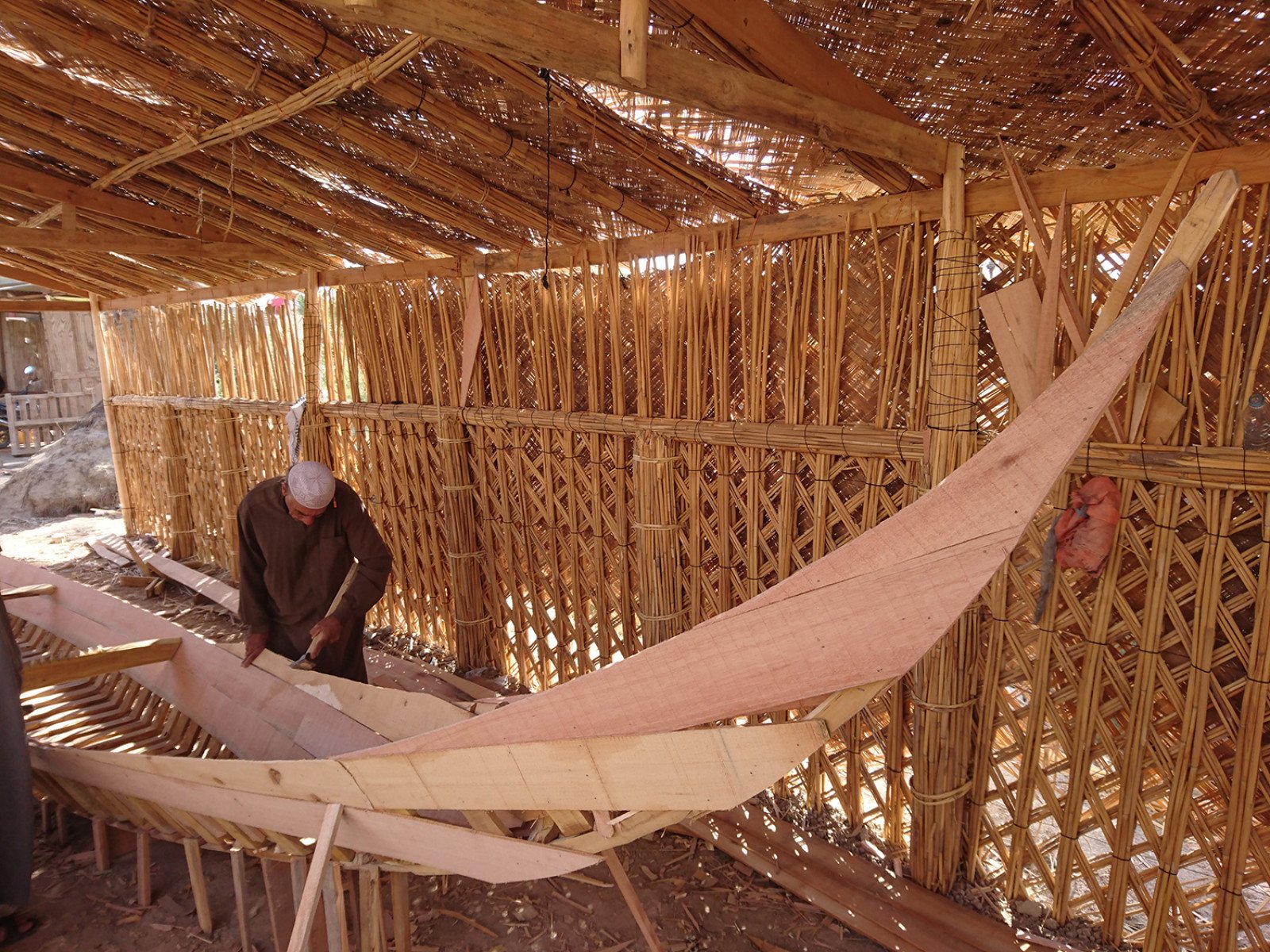
1 - In Iraq, a movement to rediscover traditional boating is breathing new life into ancient crafts, even amidst years of conflict and a changing climate. Here, a boatbuilder in Huwair skillfully shapes the prow of a Tarada—a traditional Iraqi river canoe—using locally sourced materials and centuries-old techniques. This revival is preserving vital knowledge and cultural heritage.
© Rashad Salim, Safina Projects and Open Museum Initiative for Water Culture (Basra Hub), 2019.
2 – Community effort is at the heart of Iraq's boatbuilding revival. In the town of Hit, on the banks of the Euphrates, residents work together to lift the heavy wooden base of an Isbiya barg, a traditional cargo vessel. This collaborative process strengthens social bonds and ensures the transmission of skills to a new generation.
© Rashad Salim, Safina Projects and Open Museum Initiative for Water Culture (Basra Hub), 2019.
3 - A Tarada glides across the waters of the Euphrates at Hit, powered by the paddles of female volunteers and students. This practice is more than recreation; it is a powerful act of reclaiming connection to Iraq’s historic waterways and asserting the role of women in cultural preservation and environmental stewardship.
© Rashad Salim, Safina Projects and Open Museum Initiative for Water Culture (Basra Hub), 2019.
4 - In Huwair, children watch intently as craftsmen construct a Tarada. Their curiosity and engagement are essential to the survival of these traditions. By witnessing the transformation of raw wood into a graceful vessel, they become the future custodians of their maritime heritage.
© Rashad Salim, Safina Projects and Open Museum Initiative for Water Culture (Basra Hub), 2019.
From left to right (below):
5 – A boatbuilder in Huwair carefully applies hot tar to the prow of a Tarada. This critical waterproofing step, using traditional materials, protects the hull from the river’s waters. The act connects the present-day craftsman directly to the practices of his ancestors, ensuring the boat's durability and authenticity.
© Rashad Salim, Safina Projects and Open Museum Initiative for Water Culture (Basra Hub), 2019.
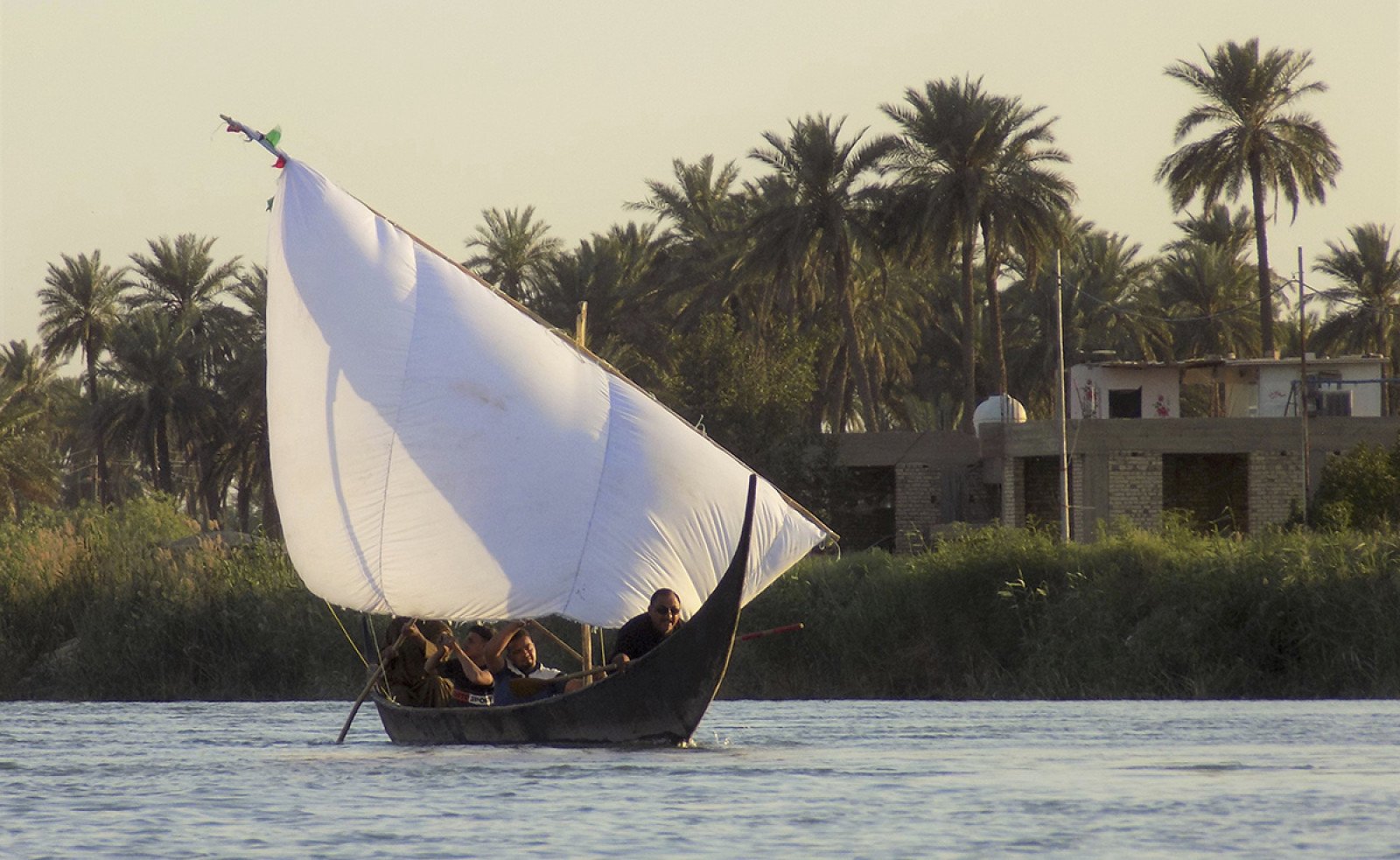
6 – A majestic Tarada under sail moves silently along the Euphrates, with the ancient archaeological site of Babylon in the background. This image is a poignant convergence of Iraq’s deep past and its living heritage, showing how traditional boats remain a graceful and practical part of the river landscape.
© Rashad Salim, Safina Projects and Open Museum Initiative for Water Culture (Basra Hub), 2019.
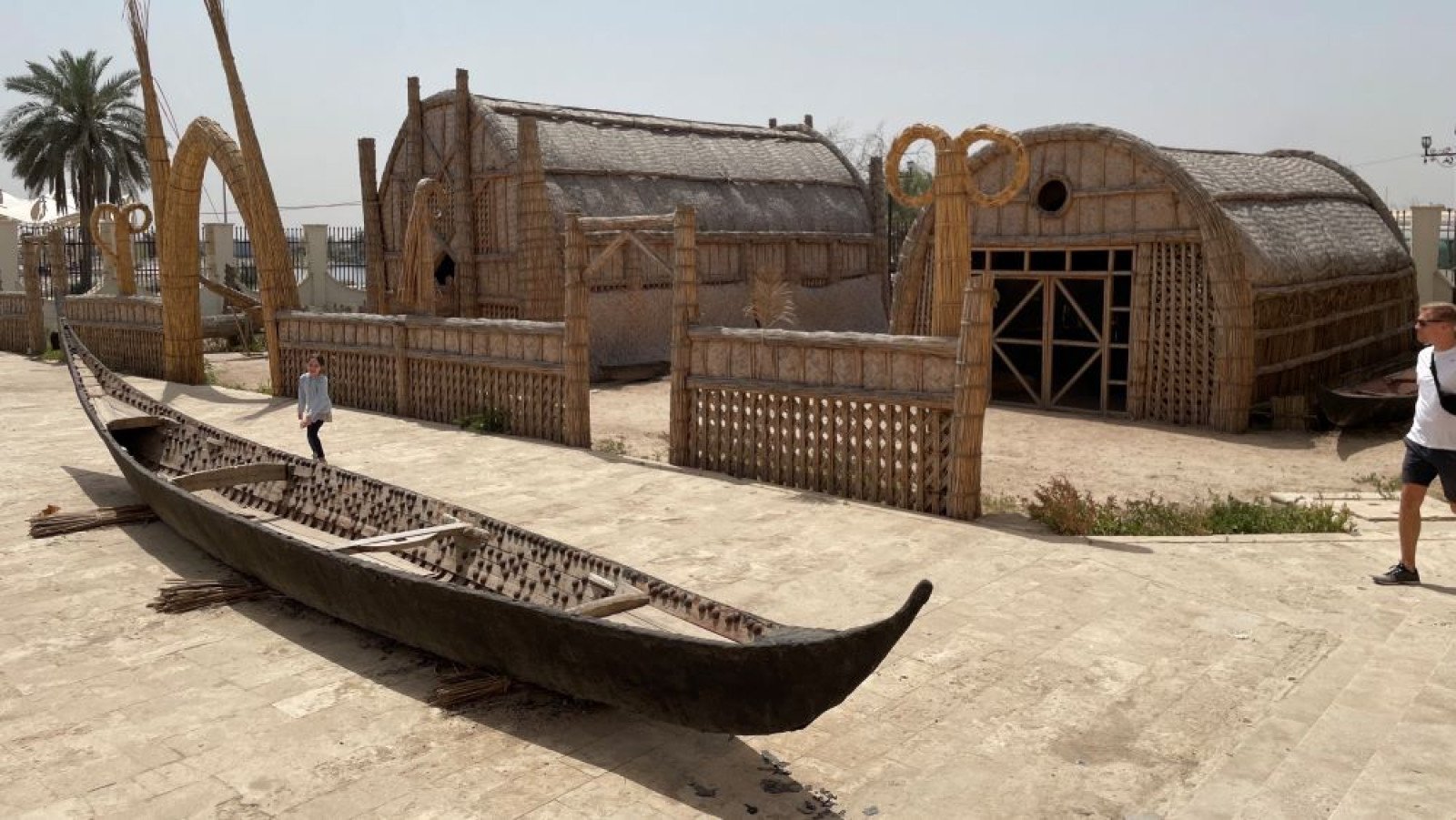
7 – A traditional Mudhif reed house in Basra serves a dual purpose: as a community gathering space and an active boat workshop. This setting underscores the deep connection between Iraq's vernacular architecture, its wetland environment, and the craft of building boats, all sustained by the same ecosystem.
© Hannah Lewis, Safina Projects, 2023.
8 – The Guffa, a unique, bowl-shaped coracle made of woven reeds and coated in tar, is a distinctive traditional craft of central Iraq. Nearly lost, it has been recovered through collaboration between Heritage Boat Clubs and local Tigris and Euphrates craftsmen. Here, a protective layer is applied to its exterior in Hilla, reviving a timeless design.
© Rashad Salim, Safina Projects and Open Museum Initiative for Water Culture (Basra Hub), 2019.