
Peru
Peru
Cultivated terraces and hydraulic systems in the Willka Qhichwa
The terraced agroecosystems of Willka Qhichwa, nestled in the Andes, near the Urubamba sacred valley to the Incas, were built between 1000 and 1400 BC. These water distribution systems served as the agricultural backbone of the Inca empire.
The terraces and related hydraulic structures were built with unique expertise, employing extremely advanced and resilient construction techniques. These systems demonstrate remarkable resilience to extreme climatic events because they have stabilized large portions of the mountains at hydrogeological levels. Today, these areas continue to be cultivated and managed by local communities according to tradition.
Beyond their technical and architectural value, the significance of these agroecosystems lies in their preservation of an essential relationship between people and the ecosystem through an extremely rich and articulated cosmovision.

"Children of Water" is an original documentary series created by Joy Penroz & Sylvain Grain and produced by Raki Films (Chile) with the support of Chilean National Television Council (CNTV), in co-production with RTVC Señal Colombia.
Gallery
From left to right (above):
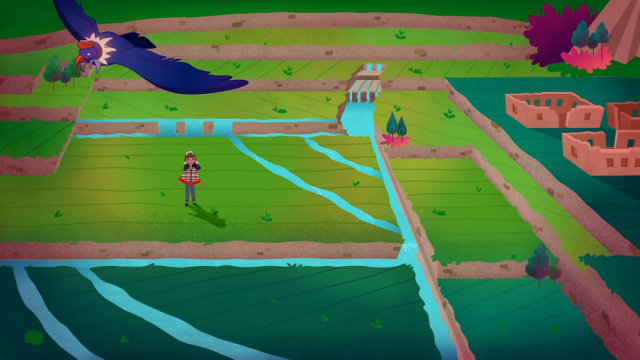
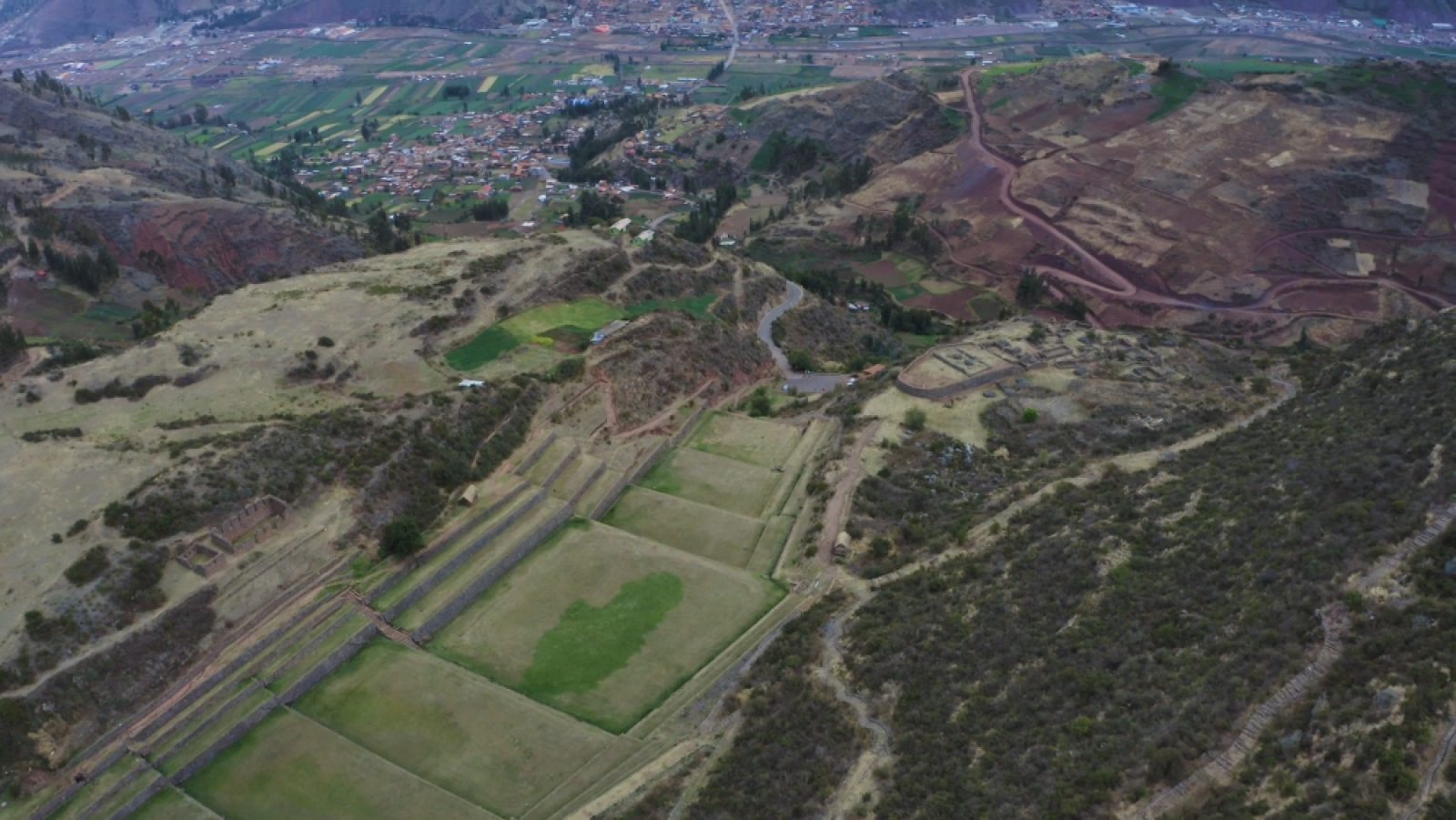
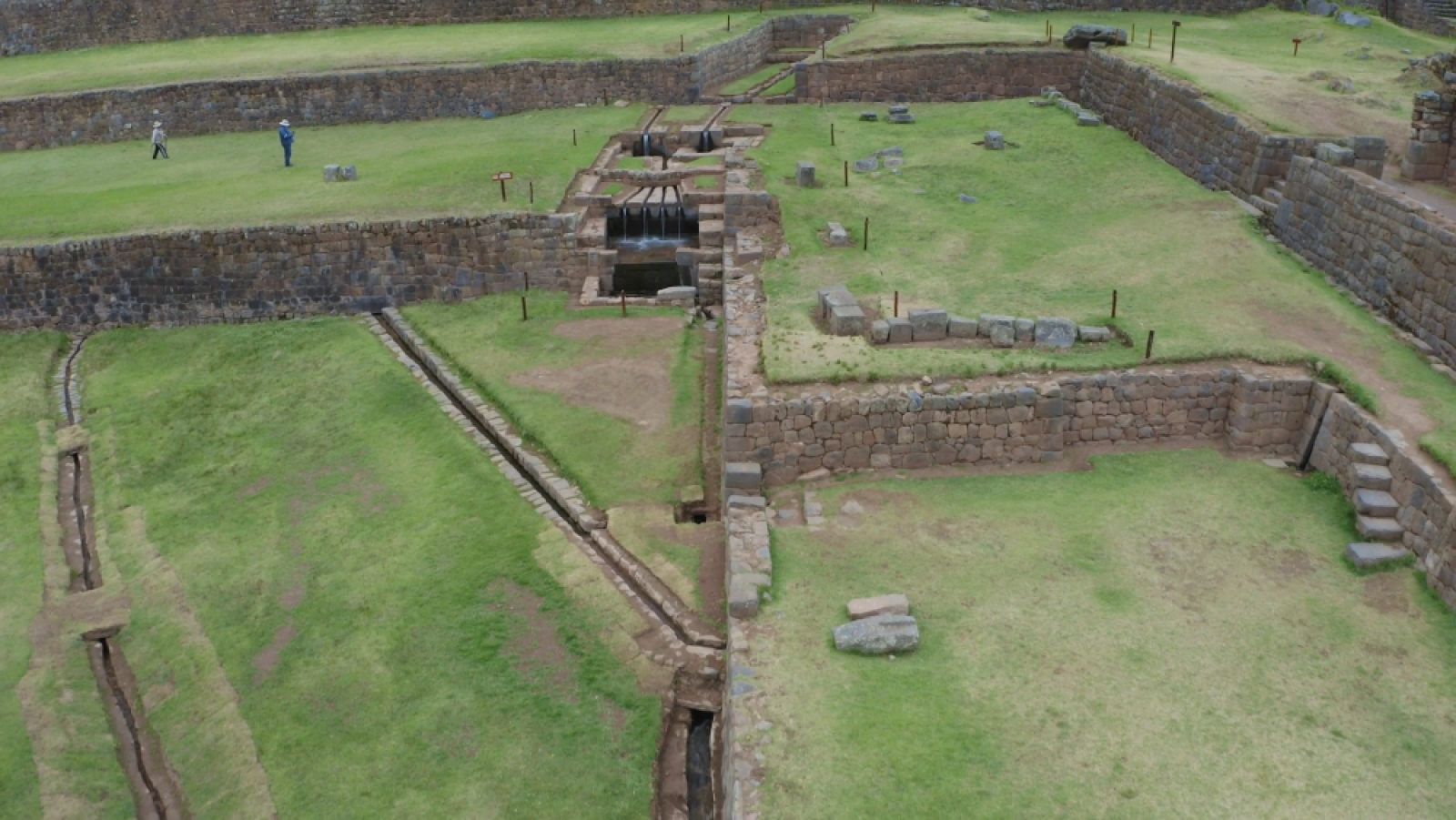
1 – View from above of the terraced agricultural system of Willka Qhichwa, in the Peruvian Andes. This system dates back to the Inca Empire (between 1200 and 1500 AD) and features an ingenious ancestral method of water management which is still in function today.
© Raki Films. From the documentary film series ‘Children of Water’, by J. Penroz & S. Grain.
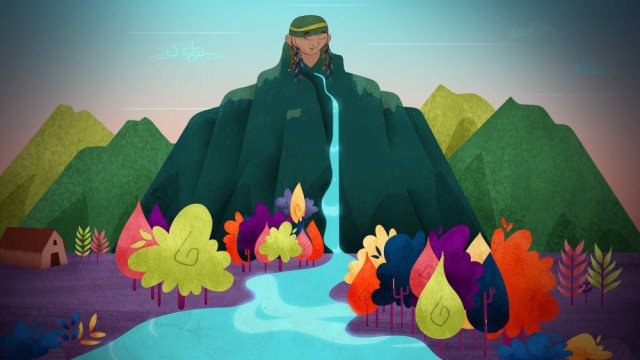
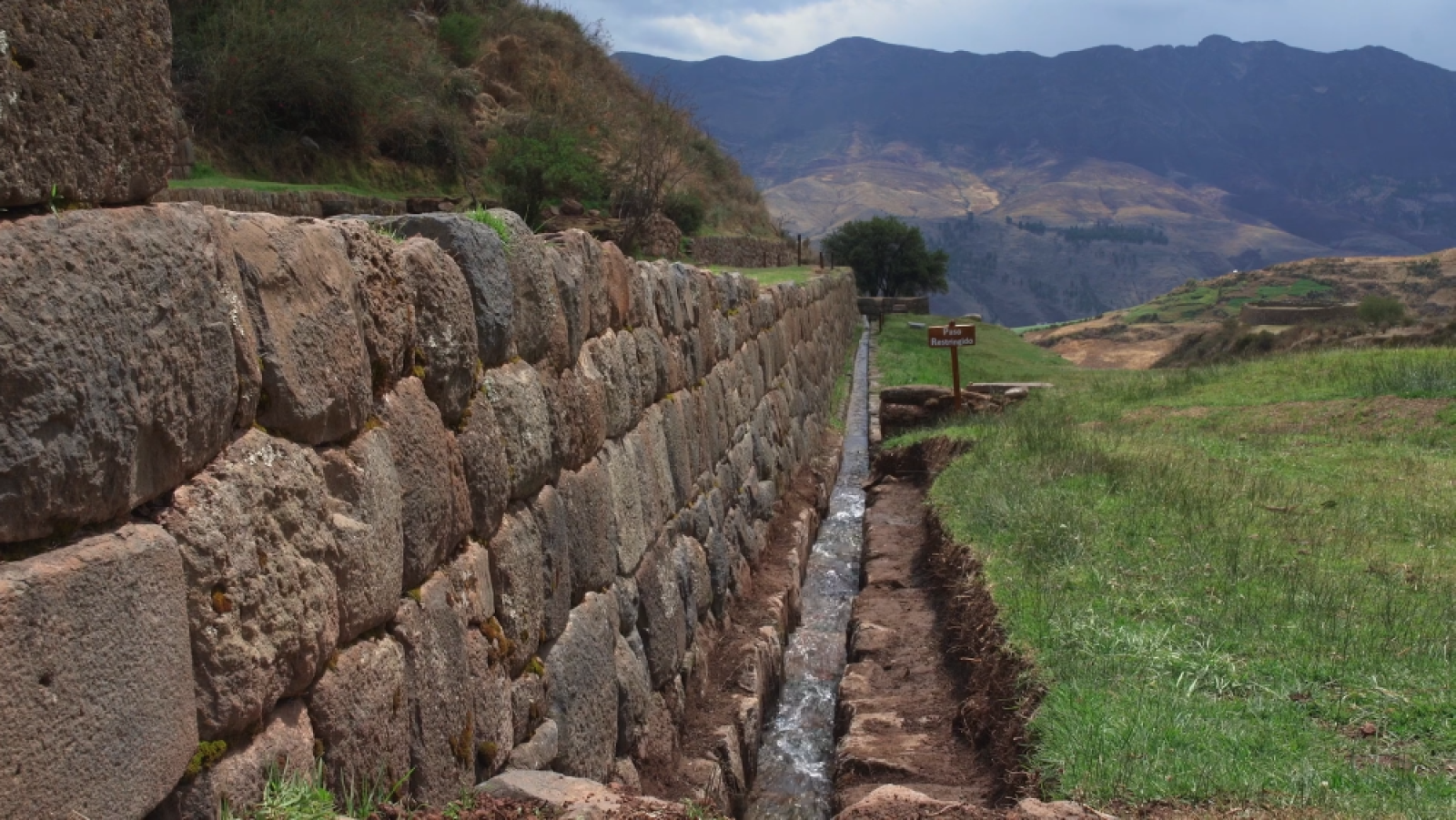
2 - One of the massive retaining walls of the terraced fields, flanked by an irrigation canal. These water structures, fed by the Urubamba River (locally called Wilcamayu, which means ‘sacred river’), have shaped and made fertile an area that was considered sacred by the Inca. It’s located not far from Machu Picchu and Cuzco, the capital of the ancient Inca Empire.
© Raki Films. From the documentary film series ‘Children of Water’, by J. Penroz & S. Grain.
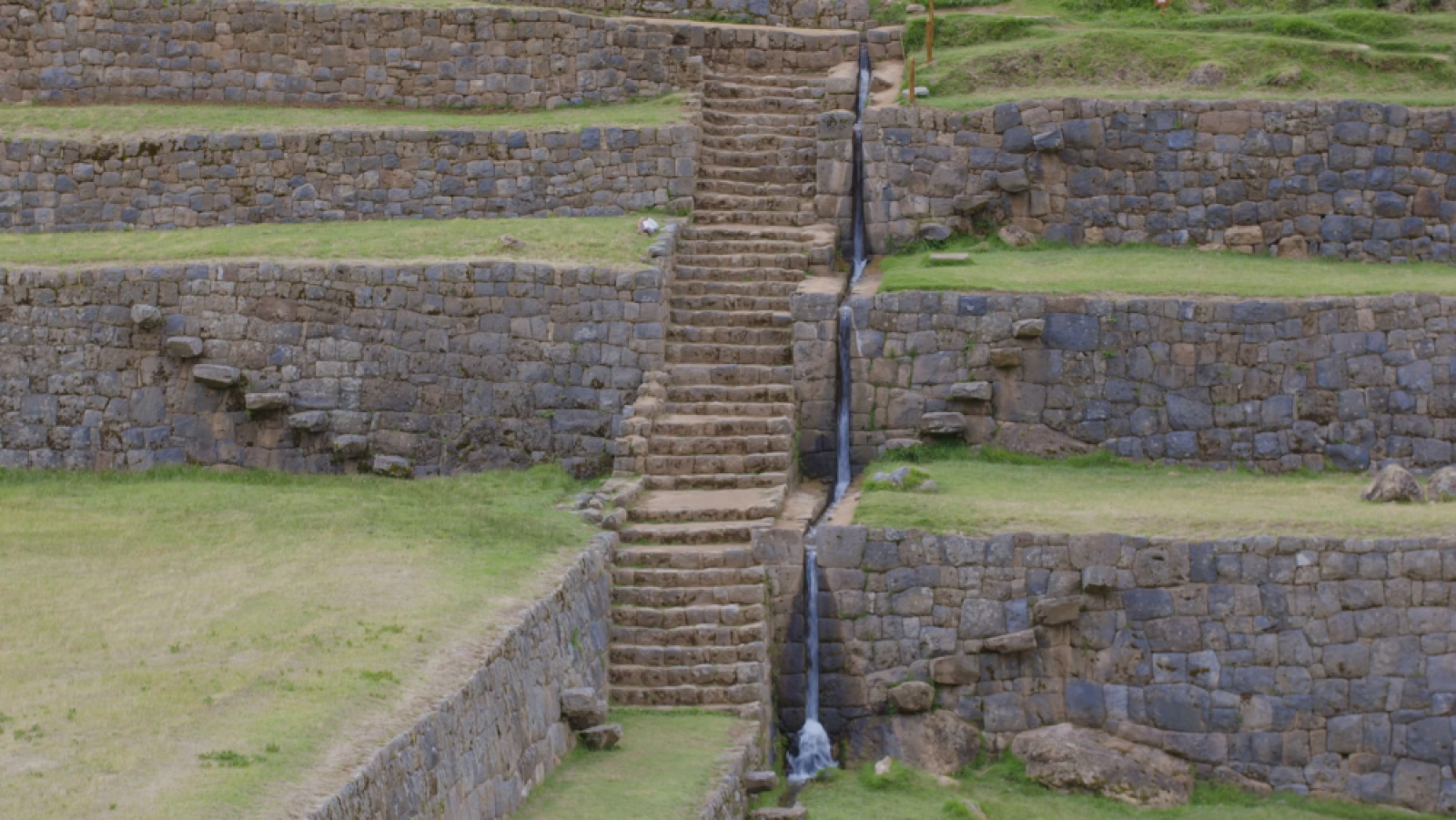
3 – The stairways connecting the various plots of land and the waterfalls of the irrigation channels. These are ancestral structures built with remarkable skill, which still retain their original function. Large-scale corn cultivation began here in the 15th century. According to scholars, this sacred valley should be considered the heart of the Inca empire.
© Raki Films. From the documentary film series ‘Children of Water’, by J. Penroz & S. Grain.
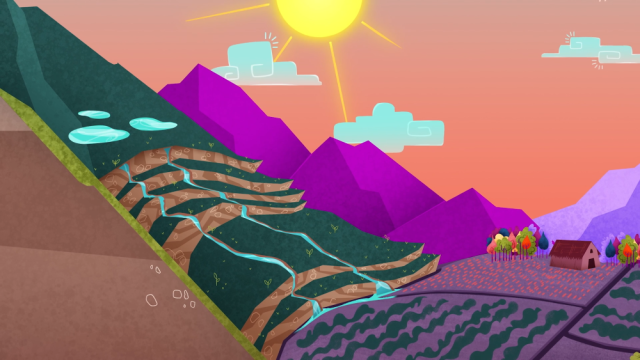
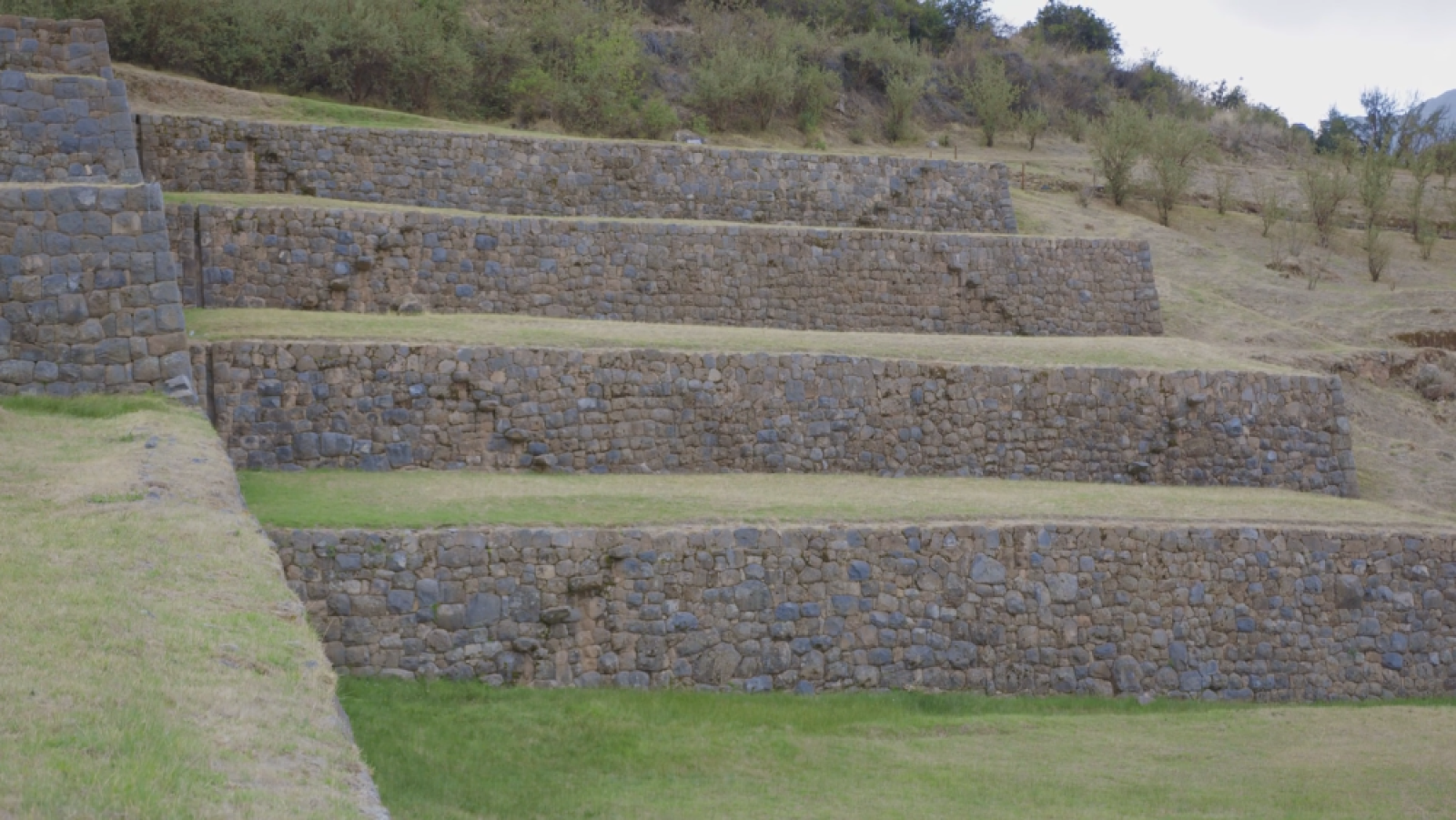
4 – Partial view of the ancient terraces that enabled the making of fertile fields in an impervious mountain area. The structures still appear intact, demonstrating the excellent level of knowledge and hydrogeological engineering that was carried out to resist extreme weather events.
© Raki Films. From the documentary film series ‘Children of Water’, by J. Penroz & S. Grain.
From left to right (below):
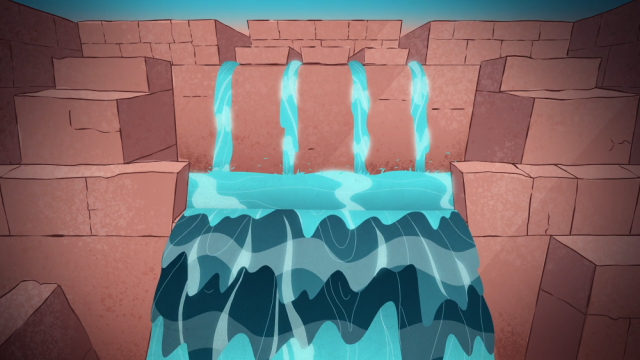
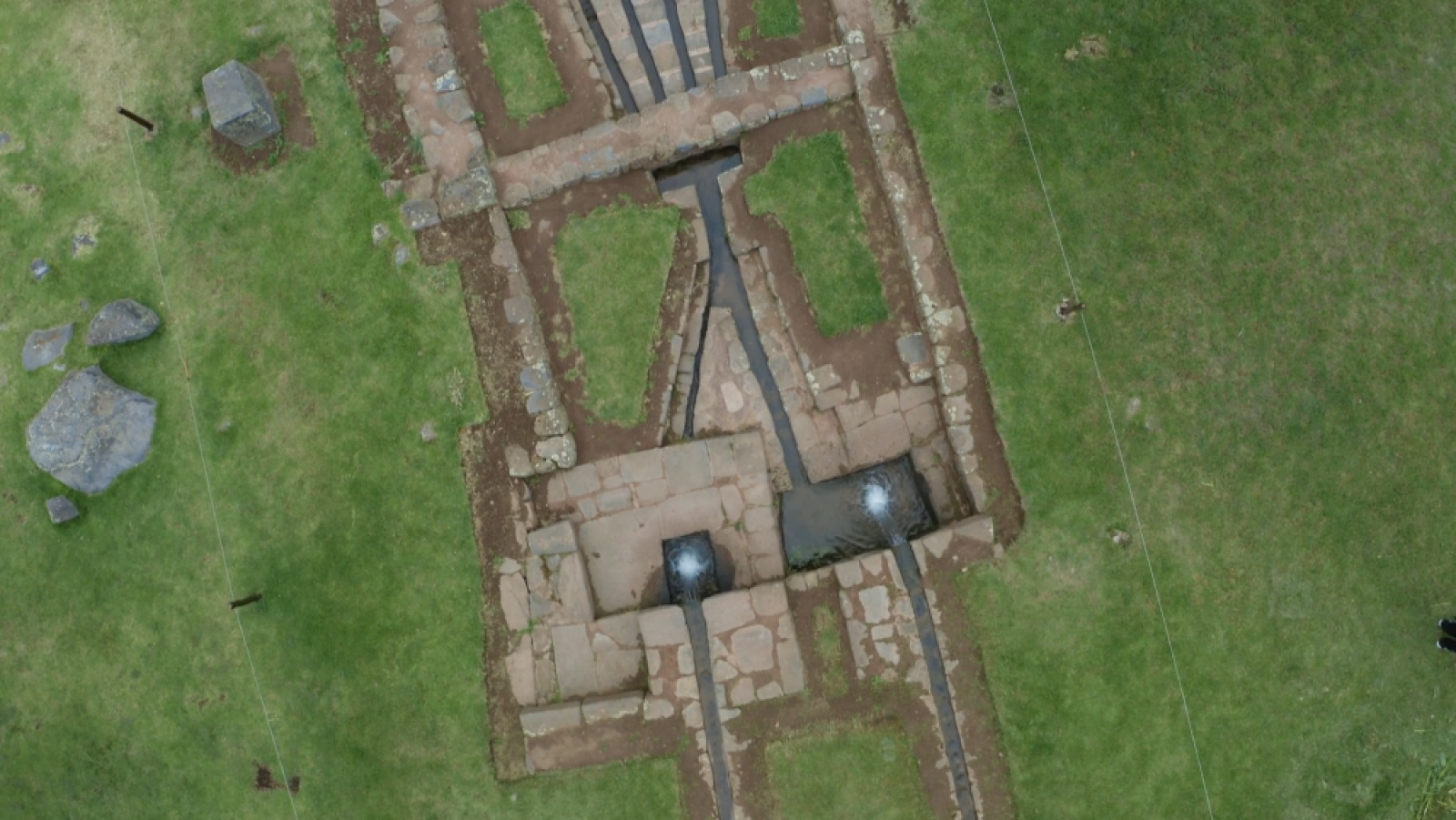
5 - Detail of the water collection and distribution system. These ancient structures were designed with great accuracy, considering the need to produce abundant crops, especially corn, within the context of a sophisticated cosmological and religious cosmovision linked to life and fertility cycles and rituals.
© Raki Films. From the documentary film series ‘Children of Water’, by J. Penroz & S. Grain.
6 – Aerial view of an impressive section of the Willka Qhichwa. All the hydraulic elements that shape the landscape can be seen: canals, water basins, embankments and stairways leading to the fields. Millennia-old ancestral knowledge, which calculated pitches and inclinations with impressive accuracy, appears highly relevant today in the context of climate change.
© Raki Films. From the documentary film series ‘Children of Water’, by J. Penroz & S. Grain.
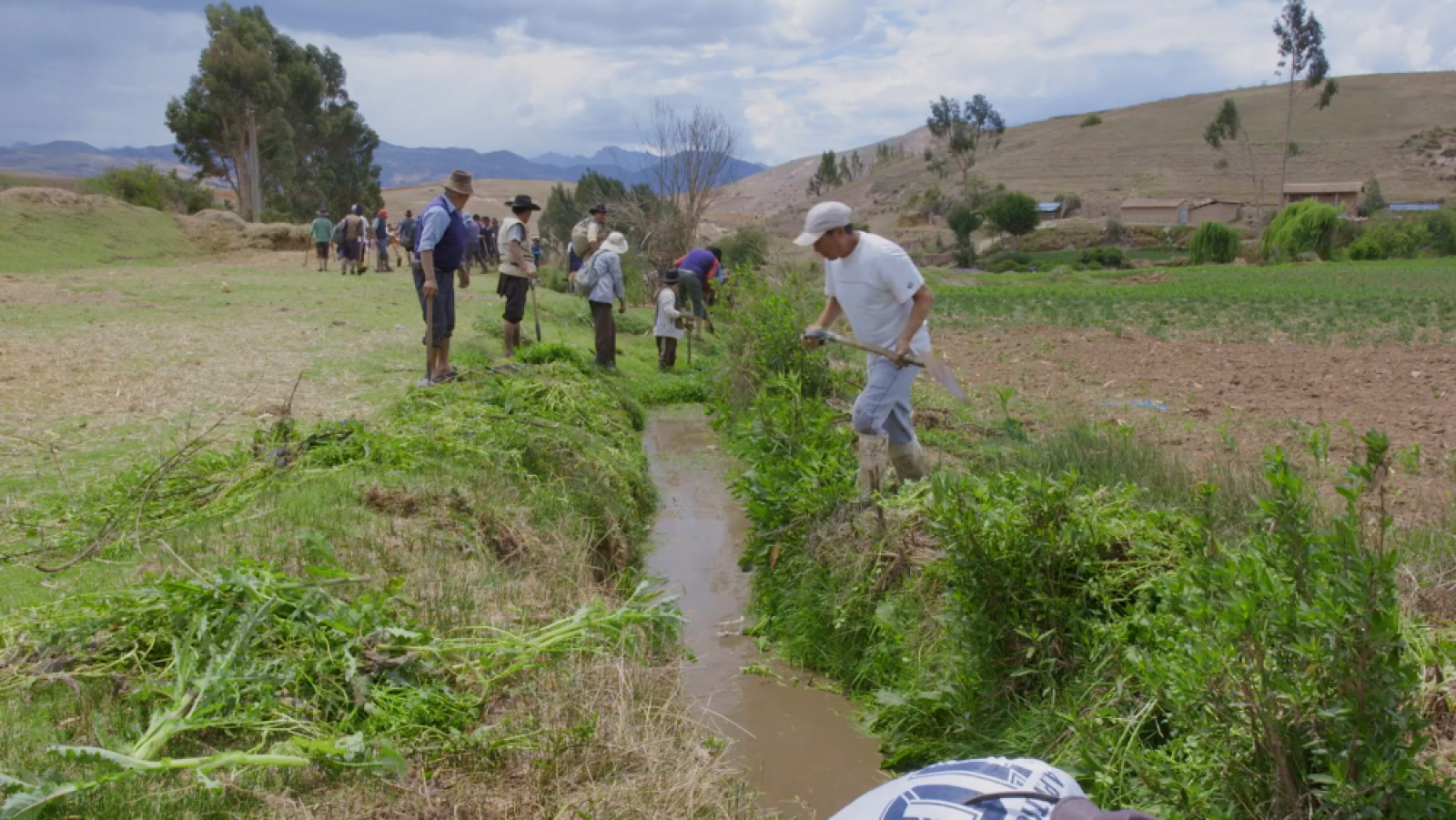
7 – The ancient Willka Qhichwa water management system which dates back to the Inca empire is still handled today by local indigenous communities which, thanks to constant community maintenance work on hydraulic structures, pass on a wealth of ancient knowledge that would otherwise have been lost.
© Raki Films. From the documentary film series ‘Children of Water’, by J. Penroz & S. Grain.
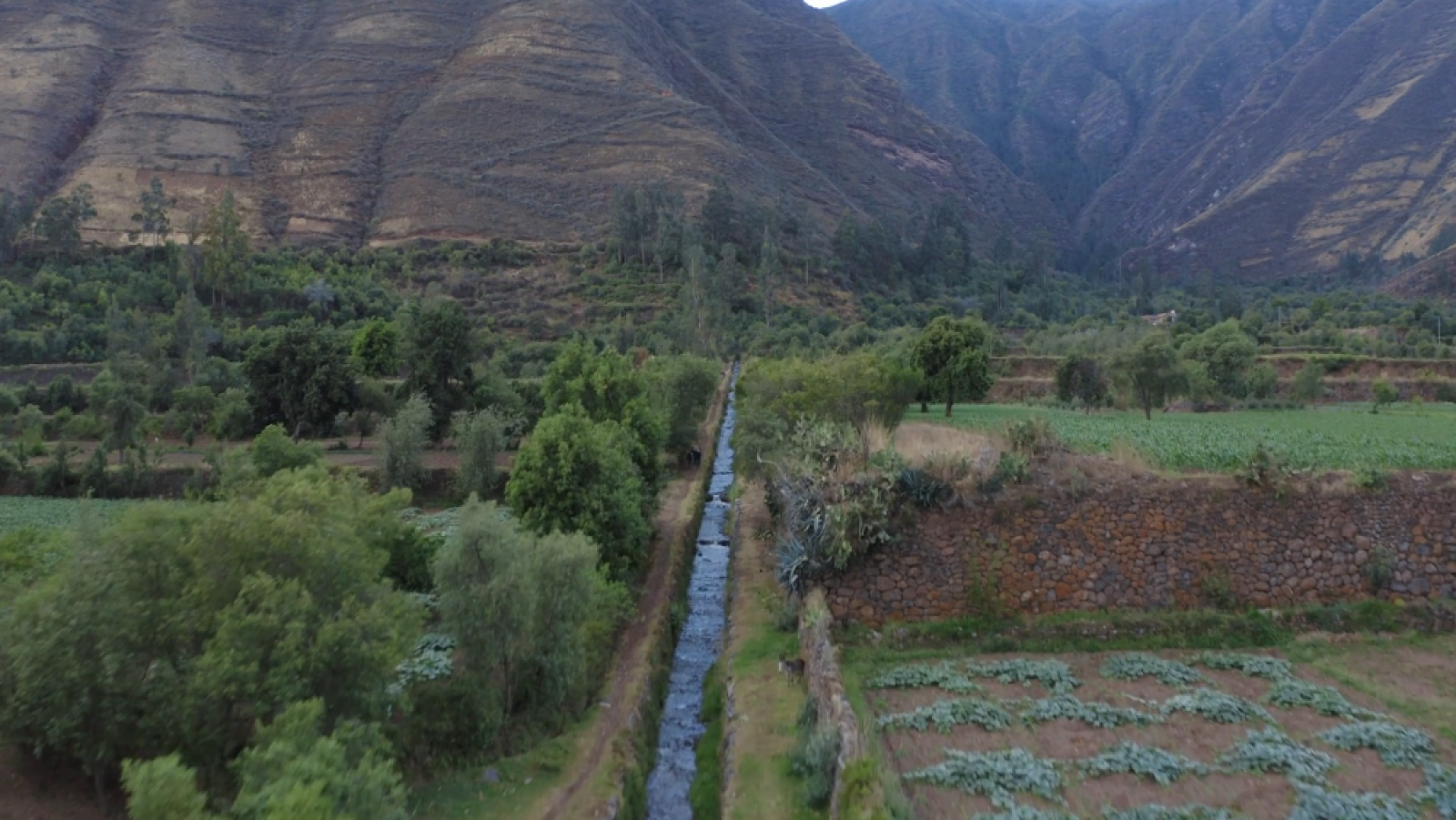
8 – One of the main irrigation channels crossing the archaeological site, still functional in ensuring water supply to farmers and local communities. The Urubamba River is fed by numerous tributaries that descend through small adjacent valleys and gorges, along which you can explore interesting archaeological remains and villages.
© Raki Films. From the documentary film series ‘Children of Water’, by J. Penroz & S. Grain.