
Water Dream Memory
Water Dream Memory
Exploring Fluid Intersections
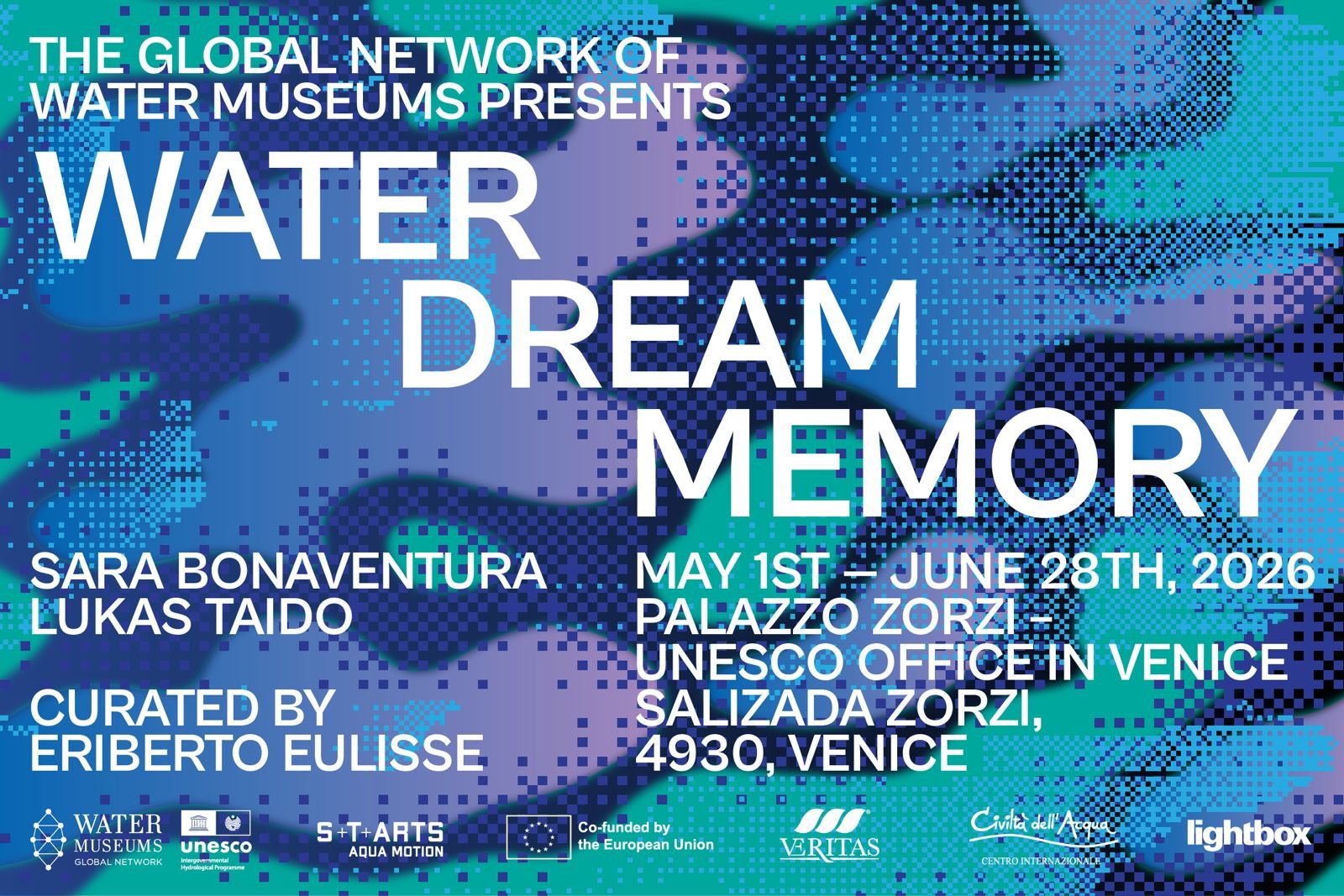
Exhibition Open from 11 am to 6 pm. Closed on Mondays. May 1–June 28, 2026.
The exhibition WATER DREAM MEMORY is hosted at Palazzo Zorzi, headquarters of the UNESCO Office in Venice, in conjunction with the 61st International Art Exhibition of La Biennale di Venezia. The exhibition explores water as a threshold element: unstable, elusive, and suspended between presence and disappearance. This liminal condition mirrors today’s ecological crisis—fragmented, often invisible, yet deeply shaping our societies.
Organized by WAMU+NET and curated by Eriberto Eulisse within the framework of the S+T+ARTS AQUA MOTION project, the exhibition brings together artistic practices that translate scientific research into immersive and poetic experiences, namely through the works Thermal Alchemy, by Sara Bonaventura, and Intermittence, by Lukas Taido. Both artists translate scientific data into visceral imagery and spatial tensions, allowing water – whether present, absent, or remembered – to emerge as a critical and sensitive force.
Through this aesthetic inquiry, the exhibition aims at reconnecting individuals and communities with water as a shared heritage and a collective responsibility. Eschewing traditional narratives of catastrophe, WATER DREAM MEMORY creates immersive zones of attention. It invites viewers to slow down and engage with water not as a ‘neutral resource’ but as a living matter shaped by time, circulation, and care.
Featured artists and artworks
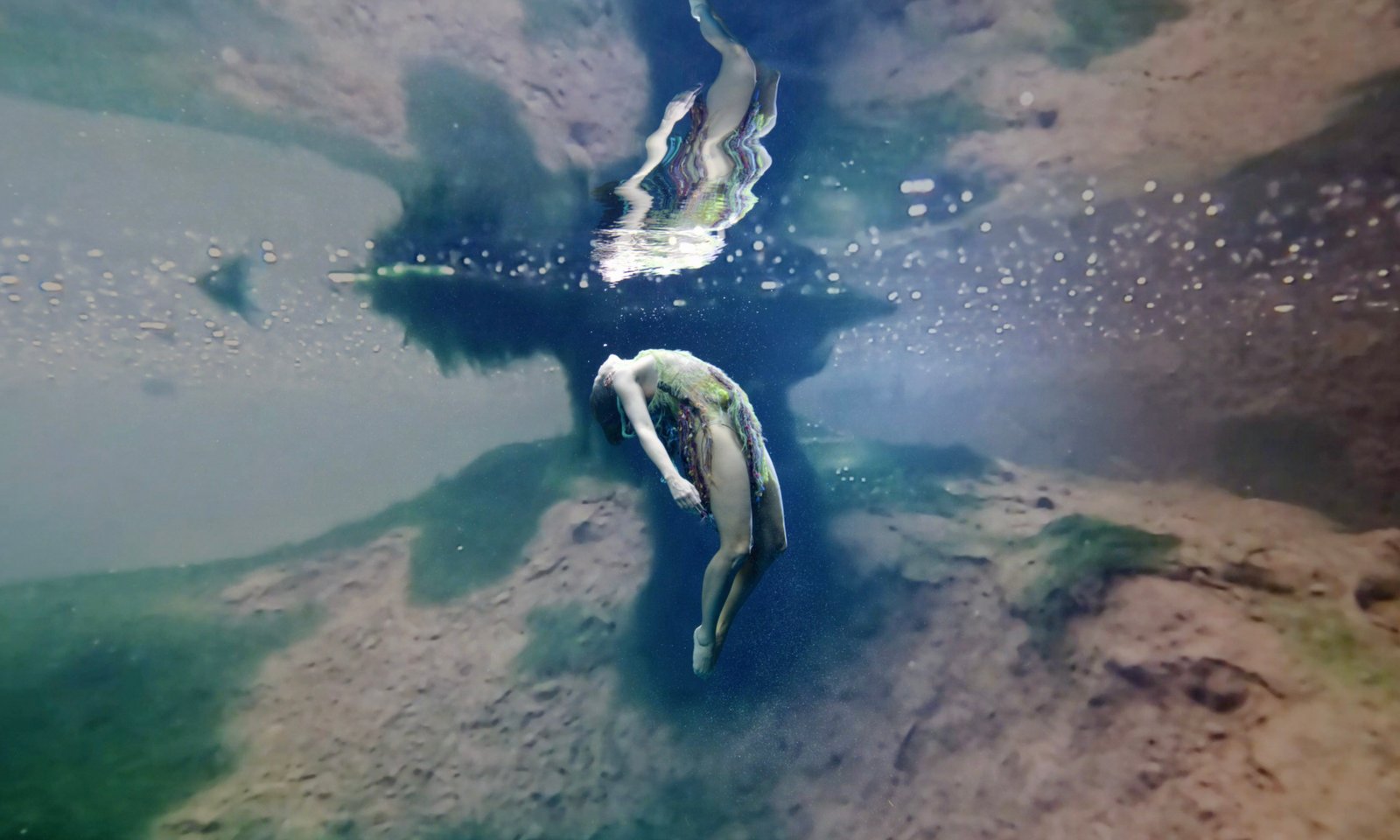
Frame from Thermal Alchemy (2026), by Sara Bonaventura. Performer: Julie Gautier.
Watch the video trailer
Sara Bonaventura - Thermal Alchemy
Developed during her artist residency “Re-imagining Water” hosted by the Municipality of Montegrotto Terme (Padua), this work explores the thermal waters of Montegrotto Terme, moving across archaeology, geology and biology. Her multimedia work traces a cosmic journey from the Earth's origins to the pulsating heart of the Euganean Hills, where water becomes the bridge between deep geological time and the unconscious. Inspired by the latest theories in astrobiology, which identify primordial hot springs as the biochemical cradle of life, the narrative retraces the planet's history in 15 minutes. From the emergence of anaerobic and aerobic life in the ancestral ocean to the secrets of endosymbiosis, we rediscover in the cyanobacteria of the Euganean muds, the primordial witnesses of an uninterrupted biological epic.
The thermal water circuit is understood not merely as a geological phenomenon, but as a healing ritual rooted in the genius loci of the Hills. This ritual of ancestral reconnection is embodied by the underwater performance of Julie Gautier, inspired by the figure of the priestess of Reitia, the ancient Venetic deity of waters and healing. The springs emerge as a Thermal Alchemy released by volcanoes without craters: a liquid bridge between the memory of the rocks and human matrix. Developed in collaboration with the Museum of Ancient Spas of Montegrotto (Museo del Termalismo Antico), this artwork is an invitation to perceive thermalism as a cosmic embrace, where the water flowing today is the same that, for billions of years, has guarded and regenerated the mystery of life.
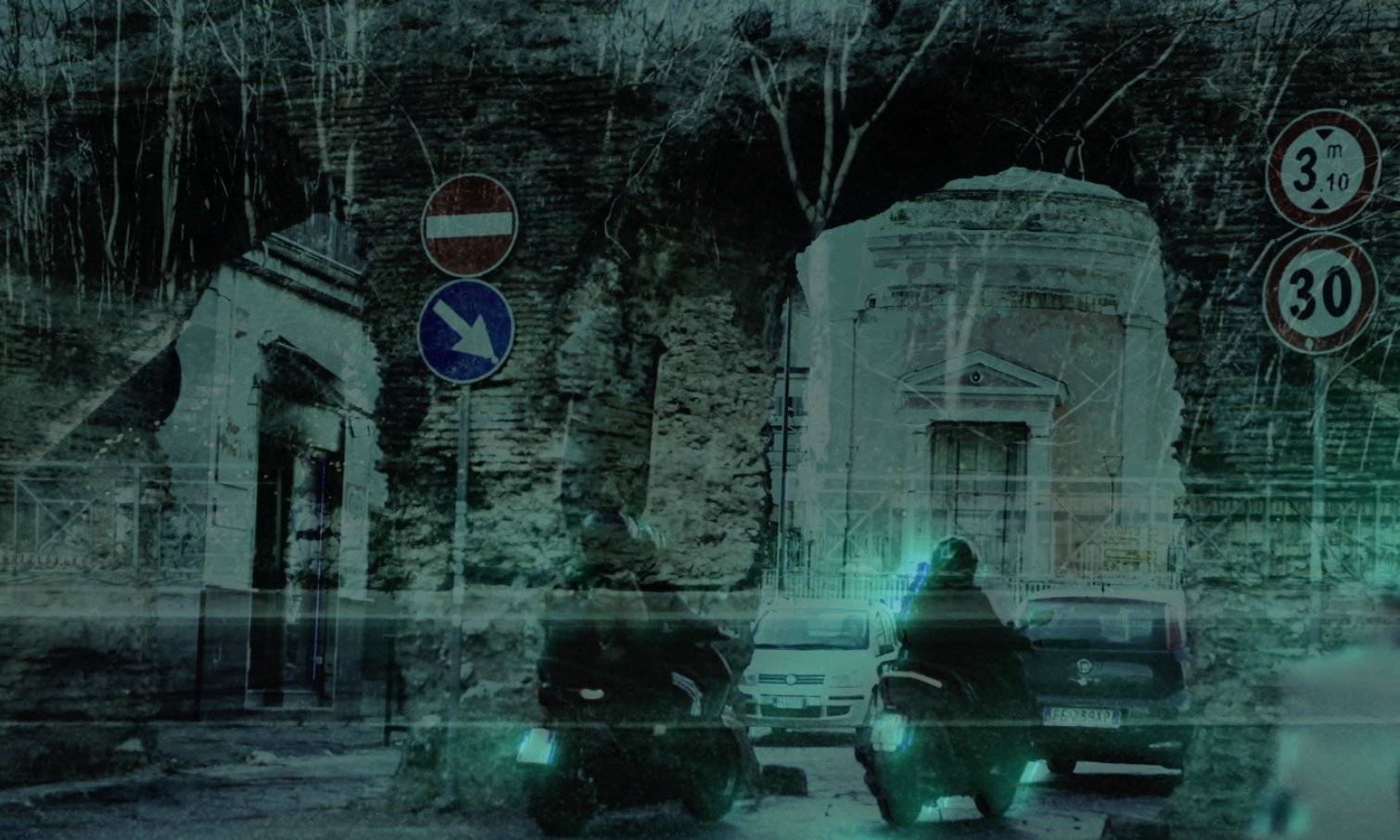
Frame from Intermittence (2026), by Lukas Taido.
Watch the video trailer
Lukas Taido – Intermittence
Created during his residency at the Archaeological Park of the Campi Flegrei (Naples), titled ‘Aqua Ductus – Water Traces’, as part of the challenge ‘Echoes of Liquid Knowledge’ this work investigates the ancient Augustan aqueduct (1st century AD). By revealing a rupture where contemporary heavy infrastructure intersects this historic system, it contrasts sustainable Roman engineering with today’s water management practices. The Augustan Aqueduct is a unique monumental infrastructure that sustained several Roman iconic cities, such as Herculaneum, Pompeii, and Naples, eventually flowing into the Piscina Mirabilis: an amazing hydraulic structure. From this site, the water supplied countless ships that navigated the Mediterranean, connecting the most remote areas of the Roman Empire. Taido’s work transforms the archaeological evidence of ancient stones and water flows into a visual experience that speaks of ingenuity, persistence, and sustainability. Through this video installation, the artist highlights the stark paradox of our consumption patterns.
Today, by contrast, many diesel trucks pass by the ancient hydraulic structure, burning fossil fuels, emitting CO2 and toxic fumes to haul palettes of bottles filled with water from the same spring, sold to citizens in thousands of small plastic containers. In Taido’s work, convoys of trucks bypass forgotten vestiges of the old aqueduct — a silent, resilient, unparalleled symbol of farsighted water management that, 2.000 years ago, provided water for free to all citizens, requiring no energy consumption and generating zero emissions.
Artists
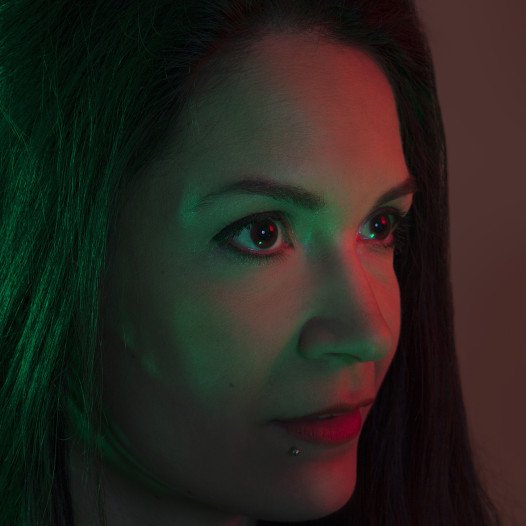
Sara Bonaventura is an Italian visual artist, PhD fellow, educator working at the nexus of lens-based media and emerging technologies. Her practice is rooted in a "post-nature" ethos, blending media archaeology with science fiction and hydrofeminism to explore trans-corporeity and interdisciplinary genealogies. As a storyteller, she investigates how visual languages can bridge the gap between scientific modeling and sensorial experience. Her works have been presented at international festivals and institutions such as NYC Anthology Film Archives, Ann Arbor Film Festival, Athens Digital Arts Festival, ISEA at Gwangju Asia Culture Center, MOMus Thessaloniki, Matadero Madrid, and Boston CyberArts Gallery etc. She has received awards for Best Experimental Short at the Annual Aarhus Film Festival and the Los Angeles Super Shorts Film Festival for a work inspired by scientific models, which was also screened at COP27 in Sharm El-Sheikh via ikonoTV, at Amsterdam FIBER festival, the Copenhagen Nature & Culture festival etc. Her debut feature, Forest Hymn for Little Girls, pioneered a community-based documentary approach and premiered at the Thessaloniki Documentary Festival. She has been selected for the Biennale College Cinema Immersive 2025 and the Venice Gap-Financing Market at the 82nd Venice International Film Festival.
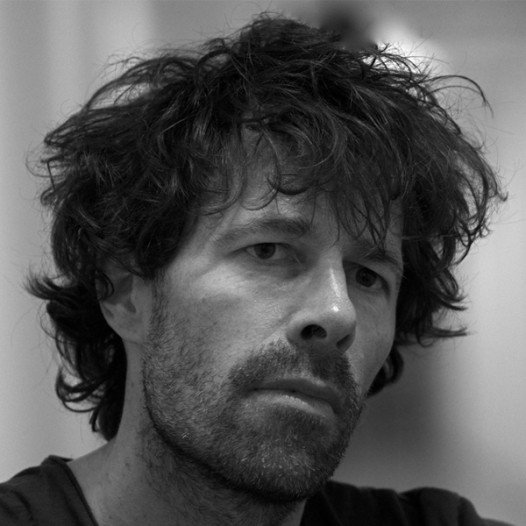
Lukas Taido is a Berlin-based multimedia artist, known for his immersive installations combining and intertwining visual and auditive elements. He has created large-scale video-mappings (Munich Town Hall, Alte Münze Berlin, Lichtfest Leipzig), audiovisual sculptures (Venice, Deutsches Museum Munich, TV-tower Dortmund, Munich Airport) and sound installations (Shanghai Tower, Weimar Castle). He often collaborates with scientific institutions, fusing art and research. Besides creating visual content, he also composes the music and creates the sound-design for his works. His media art practice involves searching for multiple narratives and unstable truths in their superpositions – through archival research, scientific exchange, experimentation, and technology. In parallel, by designing the soundscapes of his multisensory artworks, he focuses on exploring the points of tension between emotion as the antithesis of nebulous abstraction and merely conceptual approaches. The result of these collisions can be reflected in the non-linear temporalities of immersive installations, even more so in their subjective observation, or materialize in what he calls "soundsculptures" as independent, ephemeral entities. The combination of his images and audio documents from archives are aimed at creating public, mentally barrier-free spaces.
PRODUCTION CREDITS
For the work by Sara Bonaventura: J. Gautier (performer); F. Fischer, T. Meyer, V. Cara-Kerr, F. Gläßer and J. Bon De Sousa (UW team); P. Fabbri (groundwater modelling, Univ. of Padova); M. Secco, S. Dilaria and J. Olah (EuQuGEA, Univ. of Padova, for archaeometric analysis and LiDAR visualization); I. Duro (Science into Image, micrographs of bacteria); N. Lucchese (sound design); F. Marotta (color correction); S. Pesce (VFX); F. Caldara (Pietro d’Abano Thermal Studies Centre); N. La Rocca (Univ. of Padova). Special thanks: R. Mortandello (Mayor of Montegrotto Terme ); C. Destro (Museo del Termalismo Antico); E. Boaretto and G. Boaretto (Y-40 Studios), Amerigo Mariotti (technical support).
For the work by Lukas Taido - Bileam Tschepe / Elekktronaut (touch-designer software patches); VEXS Berlin (technical support); O. Marg (carpenter). Special thanks: A. Hartz, L. Herterich, L. Sturz and A. Herterich (for the Venice exhibition); F. Pagano and F. Russo (Parco Archeologico dei Campi Flegrei, Naples); F. Carlevaris, Pluriverso (video production coordination in Naples); A. Tosi (Centro Studi TE.AM, Naples); M. Merola (inspections along the Augustean Aqueduct); P. Parolin (biologist).
ACKNOWLEDGEMENTS
A. Vettoretti (WAMU+NET Water Ambassador); M. Landry, B. Colasanti and C. Vincenzi (UNESCO Office in Venice); V. Casali and V. Marbese (safety coordination); M. Sartore, M. Girardin and M. Dosca (Lightbox); S. Brandao, P. Carvalho and R. Sousa (INOVA+); R. Pergamo (MASE); S. Capaldo (Federalberghi Terme); C. Scotton (Studio Lenarda); F. Munari (cultural economist); V. Duò (exhibition mediator); I. Leonardelli and G. Tognon (project managers, WAMU+NET team); P. Pypaert, M. Benetazzo and T. Ianeselli (WAMU+NET team); R. Seccarello and M. Camuffo (Veritas); L. Bonato and G. Pozzebon (Civiltà dell’Acqua International Centre).
THE PROJECT
S+T+ARTS ‘Aqua Motion’ is a European project supporting artistic residencies focused on water-related environmental challenges. By fostering collaboration between art, science, and technology, the project promotes innovative and socially relevant approaches to water management. At the heart of the project are 25 artistic residencies: several artists were invited to collaborate closely with researchers, policymakers, businesses, and local communities. This interdisciplinary approach is driven by a clear ambition: to co-create socially meaningful solutions for water sustainability.
Partners: INOVA+ (Portugal) (Coordinator), AIR CENTRE (Portugal), +ATLANTIC CoLAB (Portugal), Rio Neiva (Portugal), WAAG (Netherlands), Hortimare VM (Netherlands), Ars Electronica (Austria), TU Wien (Austria), WAMU+NET (Italy), MUSE (Italy), Pro Progressione (Hungary), KIKK (Belgium).
Project Duration: January 2025 – December 2026
Co-funded by: European Union, S+T+ARTS Programme
website: https://starts.eu/what-we-do/residences/startsaquamotion/
Download here the press kit of the exhibition Water Dream Memory
Scarica qui la cartella stampa della mostra Water Dream Memory